
Key Takeaways
- The biggest price drivers are skylight type, frame material, glazing choice, and roof complexity – understanding each one helps homeowners budget more accurately.
- Solar-powered venting skylights may qualify for a federal Residential Clean Energy Credit; homeowners should consult a tax professional to confirm eligibility, as qualification can vary by manufacturer and product.
- Professional installation with proper flashing is the single most important factor in preventing leaks – a detail that affects both short-term cost and long-term value.
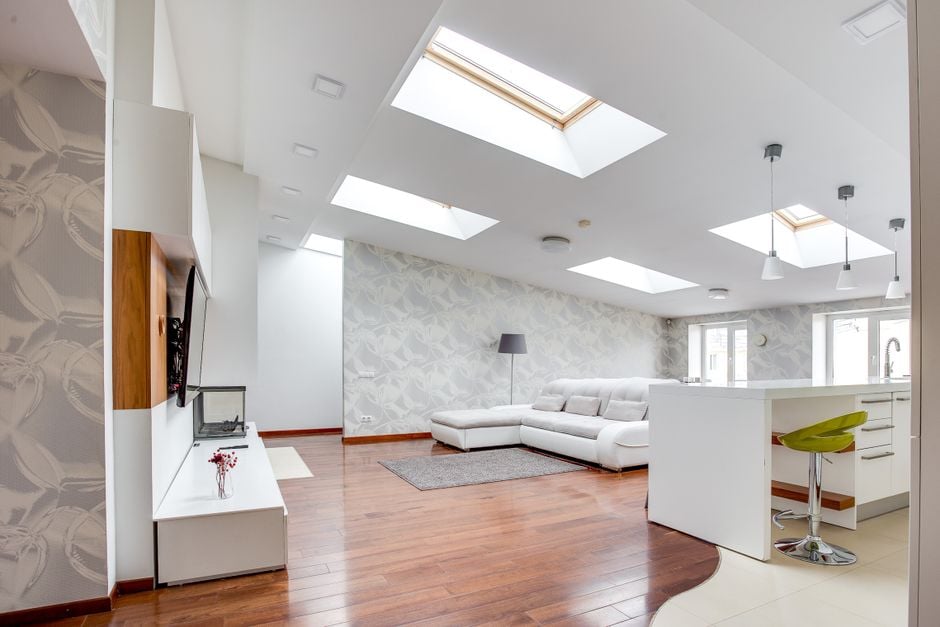
Skylights can completely transform a room – flooding it with natural light, making spaces feel larger, and even lowering energy bills. The skylight installation cost one varies more than most homeowners expect. The size of the unit is just one piece of the puzzle. Frame material, glazing type, roof pitch, and optional features all push the final number in different directions. This breakdown covers what actually moves the needle on price, so there are no surprises when it’s time to get a quote.
According to the New Jersey roofing experts at Asch Roofing, homeowners often focus on the product itself when comparing prices, but the skylight installation requirements, roof design, and glazing package usually have a much greater impact on the final project cost. Understanding these factors early can help homeowners choose the right solution for their home and budget.
Skylight Type Drives the Biggest Price Difference
The type of skylight chosen sets the baseline for the entire project cost. The range between the most affordable and most expensive units is wide enough to matter significantly.
Fixed vs. Venting Units
Fixed skylights are sealed permanently – they let in light but don’t open. Because they have no moving parts, they’re simpler to manufacture and install, which keeps both material and labor costs lower. Venting skylights can be opened to allow airflow. That added functionality comes with a higher price tag, both upfront and in the complexity of the installation.
Tubular vs. Full-Size Skylights
Tubular skylights are a budget-friendly entry point. They use a small rooftop dome and a reflective tube to channel daylight into interior spaces – ideal for hallways, closets, or bathrooms where a full-size unit isn’t practical. Materials alone typically run $200 to $500. Full-size skylights cost considerably more in materials, but they deliver a dramatic visual impact that tubular units simply can’t match.
Electric, Solar, and Manual Options
Venting skylights come in three control types, each with a different cost profile:
- Manual: A crank or rod opens the unit – the most affordable venting option.
- Solar-powered: Runs on a built-in solar panel, eliminating the need for electrical wiring. These may qualify for a federal Residential Clean Energy Credit, which can soften the upfront cost – though homeowners should verify eligibility with a tax professional.
- Electric: Motorized and typically remote-controlled, with materials reaching up to $2,000 for the unit alone. The most convenient option, but also the most expensive.
For most New Jersey homeowners, the choice between these three comes down to how much hands-on control they want versus how much they’re willing to spend for automation.
Frame Material and Glazing Add Up Fast
Once the skylight type is settled, frame material and glass glazing are the next two variables that can shift the total cost by hundreds of dollars.
Vinyl, Metal, or Wood Frames
Frame material affects price, long-term maintenance, and insulation performance:
- Vinyl frames are the most affordable option, ranging from $150 to $1,000 in materials. They resist moisture well and require minimal upkeep – a practical choice for most homes.
- Metal frames (typically aluminum) run $200 to $1,500 and offer added structural strength, though they conduct heat and cold more readily than vinyl.
- Wood frames sit at the top of the range at $300 to $2,500. They provide excellent insulation and a premium aesthetic, but require more maintenance to prevent moisture damage over time.
Glass Glazing: Tempered vs. Double-Pane
Glazing addresses safety and thermal performance. Tempered glass is treated to shatter into small, less dangerous pieces – a safety requirement in most building codes. Double-pane glass adds an insulating air gap between two layers, reducing heat transfer in both summer and winter. Double-paned units can range from $300 to $3,500 in materials depending on size and coatings. Low-E coatings, which reduce UV and infrared light, are another upgrade worth considering for energy-conscious homeowners. In New Jersey’s climate, proper glazing pays dividends year-round.
Your Roof Type Affects Labor Costs
Pitch, Material, and Accessibility
Labor for skylight installation ranges from $300 to $2,500, and that wide spread is almost entirely driven by roof characteristics. A straightforward asphalt shingle roof with moderate pitch is the easiest – and least expensive – scenario. Costs rise when:
- The roof has a steep pitch, requiring additional safety equipment and slower work.
- The roofing material is tile or metal, which demands more careful cutting and specialized flashing techniques.
- The installation site is difficult to access, adding time to staging and setup.
- Structural modifications are needed, such as cutting through rafters or adding a light shaft for the interior.
Optional Features Worth Considering
Sunscreens, Blinds, and Shades
Standard skylights deliver full, unfiltered light – which isn’t always ideal. Sunscreens reduce glare and heat gain during summer months. Venetian blinds and fabric shades offer more precise light control while adding a decorative element to the interior. In rooms with southern or western exposure, these accessories can meaningfully reduce cooling loads. Each add-on carries its own cost, so it’s worth deciding on these before finalizing a quote rather than retrofitting later.
Electronic Controls and Rain Sensors
For venting skylights, electronic controls allow opening and closing via a wall switch or remote – no ladder required. Rain sensors take this a step further, automatically closing the skylight when precipitation is detected. Both features add to the upfront cost but reduce day-to-day friction significantly. For skylights installed in hard-to-reach locations, a rain sensor goes from a convenience to a practical necessity.
Long-Term Value: Energy Savings and Home Appeal
Lower Energy Bills Through Natural Light and Passive Heating
Modern skylights with insulated glass and low-E coatings reduce the need for artificial lighting during daylight hours and can contribute to passive solar heating in winter. The energy savings won’t eliminate a utility bill, but they’re real and cumulative over time. Solar-powered venting models generate no electrical draw while improving ventilation – and may qualify for a federal Residential Clean Energy Credit, reducing the net installation cost for eligible homeowners.
Resale Appeal: A Soft Gain, Not a Guaranteed Return
Skylights consistently rank as a feature that buyers respond positively to – spaces feel brighter, more open, and more modern. Resale value is a soft benefit rather than a precise dollar figure. The impact depends on the home, the market, and the quality of the installation. What’s more predictable is the daily quality-of-life improvement: natural light in a kitchen, bathroom, or living area changes how the space feels to live in. That’s a return that starts on day one.
Why Velux and Professional Installation Matter
Velux is widely recognized as the leading skylight manufacturer in the country, and their product line covers fixed, manual venting, solar-powered, and electric models across a wide range of sizes. What sets Velux apart is product variety paired with a well-developed ecosystem around each unit. Manufacturer-specific flashing kits are designed to integrate precisely with the skylight, creating a watertight seal that generic flashing can’t replicate. This matters because skylight leaks are almost always a flashing failure, not a unit failure.
Professional skylight installation ensures the flashing is installed correctly, the interior light shaft is properly sealed, and the finished product performs as intended. Cutting corners on installation to save a few hundred dollars upfront is one of the most common – and costly – mistakes homeowners make with skylights. A failed seal means water infiltration, which means interior damage that can run into thousands of dollars. The labor cost is, in a real sense, an insurance policy on the rest of the investment.
Asch Roofing
10 Pierson Street
South Brunswick Township
New Jersey
08852
United States


