Tips for Selecting the Best Audio Gear for Your Car
FLORENCE, United States – April 9, 2025 / Norton Car Stereo /
Upgrading your car’s audio system can completely transform your driving experience. Whether you’re a casual listener who enjoys background music during commutes or an audiophile chasing crystal-clear sound, choosing the right car audio accessories is essential. From speakers and subwoofers to amplifiers and head units, every component plays a vital role in delivering high-quality sound. However, with so many options available, it can be overwhelming to know where to start. In this article, we’ll guide you through the process of selecting the right car audio accessories to suit your needs, your car, and your budget.
Understand Your Listening Preferences and Goals
Before investing in any car audio accessories, it’s important to understand what you want out of your car audio system. Are you someone who enjoys deep bass and thumping beats? Or do you prefer crisp treble and balanced mid-tones for podcasts and talk radio?
For bass lovers, a high-quality subwoofer and amplifier combo will make a noticeable difference. On the other hand, if you’re more into overall sound clarity and vocal performance, upgrading your factory speakers and head unit might be enough. Knowing your preferences will help you avoid unnecessary purchases and allow you to allocate your budget where it matters most.
Evaluate Your Vehicle’s Compatibility
Not all audio accessories are compatible with every type of vehicle. Your car’s make, model, and available space will impact what you can install. For instance, compact cars might not have room for large subwoofers, and some vehicles may require custom installations to accommodate upgraded head units or additional components.
Check the specifications for each accessory you’re considering, and don’t hesitate to consult with an audio professional or use online tools that allow you to input your vehicle’s details to find compatible parts. Keep in mind that newer vehicles often have integrated infotainment systems, which may require special adapters or modules for aftermarket audio installations.
Invest in Quality Speakers First
Speakers are the foundation of any car audio system. Factory-installed speakers are usually made from inexpensive materials and don’t offer the best sound performance. Replacing them with aftermarket options can result in a noticeable improvement in sound quality—even without upgrading any other components.
When shopping for speakers, look for models made with durable materials like polypropylene cones and rubber surrounds, which last longer and handle vibration better. Coaxial (full-range) speakers are easy to install and offer a solid upgrade for most drivers, while component speakers separate the woofer and tweeter for even better sound staging and clarity.
Also, consider the power handling and sensitivity ratings. Higher power-handling speakers can take more wattage from an amplifier, while sensitivity measures how effectively they convert power into volume. Matching these specs with your car stereo or amplifier is key to optimal performance.
Don’t Overlook the Power of a Good Amplifier
Even the best speakers can sound underwhelming if they’re not powered properly. An amplifier boosts the audio signal from your head unit, delivering cleaner, more powerful sound to your speakers. If you’re upgrading to high-performance speakers or adding a subwoofer, an amplifier is practically a must-have.
Choose an amp based on the number of channels you need (e.g., 2-channel for front speakers, 4-channel for full system coverage, or a mono amp for subwoofers). Pay attention to RMS power ratings and ensure they match the requirements of your speakers and subwoofers. Don’t confuse RMS with peak power—RMS gives a more accurate representation of how much continuous power the amp can deliver.
Upgrade Your Head Unit for Better Control
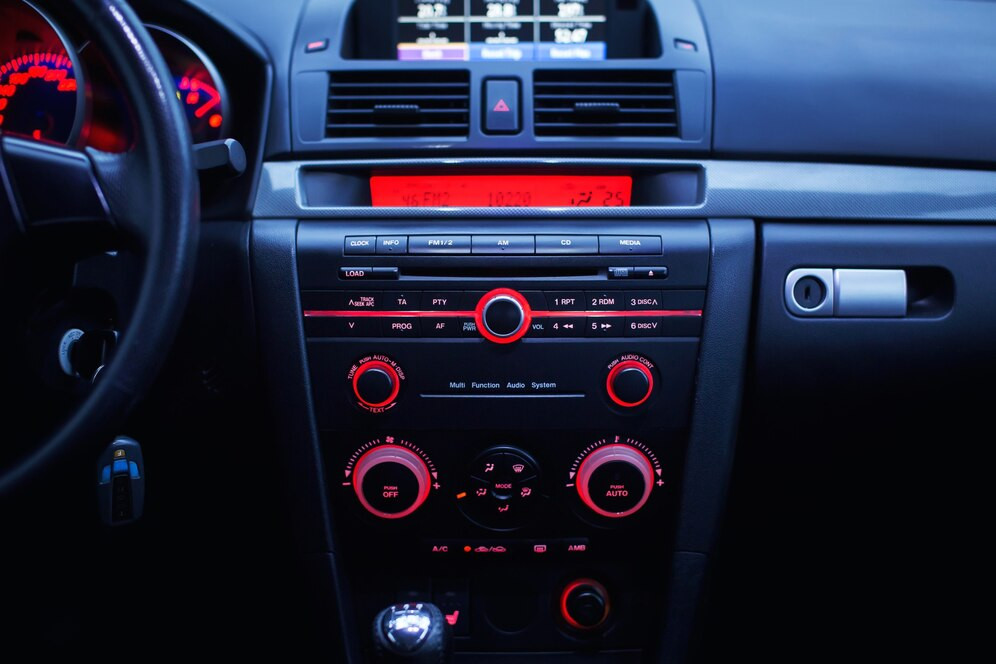
The head unit, or stereo receiver, is the control center of your car’s audio system. A good aftermarket head unit can significantly enhance your listening experience, especially if you’re looking for features like Bluetooth connectivity, smartphone integration, equalizer settings, and even support for high-resolution audio files.
Double-DIN units offer more screen real estate and features, such as touchscreen navigation and rearview camera compatibility, while single-DIN units are more compact but still powerful. Consider what features matter most to you—whether it’s hands-free calling, Apple CarPlay, Android Auto, or better sound tuning controls—and choose accordingly.
Subwoofers: The Heartbeat of Bass
If you’re a fan of low-end bass, a subwoofer is the accessory that will bring your music to life. Subwoofers are designed to reproduce low-frequency sounds that regular speakers simply can’t handle well. They add depth and fullness to your audio experience.
When choosing a subwoofer, consider the size (typically 8″, 10″, 12″, or 15″), enclosure type (sealed for tight bass, ported for louder output), and power ratings. You’ll also need to make sure you have an amplifier that can power it properly. Space is another big consideration—trunk space or under-seat options can dictate which type of subwoofer enclosure will work best for your vehicle.
Don’t Forget the Wiring and Soundproofing
It’s easy to focus only on the big components, but quality wiring and proper soundproofing can make a huge difference. Cheap wiring can cause signal loss and electrical issues, so opt for oxygen-free copper wires and gold-plated connectors where possible.
Soundproofing materials like Dynamat or HushMat can reduce road noise and vibrations, helping your audio system perform better. Installing them inside door panels, floors, or the trunk can help you hear more detail in your music without having to crank up the volume.
FAQs
Q: Can I install car audio accessories myself or should I hire a professional?
A: It depends on your experience level. Installing speakers or head units can be a manageable DIY project with the right tools and guides. However, more complex setups involving amps, subwoofers, or custom wiring might be better handled by a professional to ensure safety and sound quality.
Q: Will upgrading my audio system drain my car battery?
A: As long as the system is installed correctly and used within reason, it shouldn’t be a problem. However, high-powered systems may benefit from a capacitor or upgraded alternator to handle the increased electrical load.
Q: What’s the most important accessory to upgrade first?
A: Most experts recommend starting with the speakers. Even without a new head unit or amplifier, quality speakers can significantly improve your audio experience. From there, you can build out the rest of your system based on your goals and budget.
Q: Do I need a new head unit to upgrade my sound system?
A: Not necessarily. If your factory head unit has preamp outputs and supports audio tuning, you may be able to keep it and still add aftermarket speakers and an amplifier. However, upgrading the head unit can provide better control and audio processing.
Q: How much should I budget for a full car audio upgrade?
A: Costs vary widely depending on the components you choose. A basic speaker upgrade may cost a few hundred dollars, while a full system with amp, subwoofer, new head unit, and professional installation could run $1,000 or more.
Choosing the right car audio accessories isn’t just about buying the most expensive gear. It’s about creating a system that fits your lifestyle, vehicle, and budget while delivering the sound quality you want. Take the time to research your options, seek advice when needed, and invest in quality components. With the right setup, every drive can feel like a front-row concert experience.

Contact Information:
Norton Car Stereo
934 W EVANS ST
FLORENCE, SC 29501
United States
Norton Stereo
(843) 662-7815
https://www.nortoncarstereo.com/

Original Source: https://www.nortoncarstereo.com/media-room/#/media-room